
Blog Details
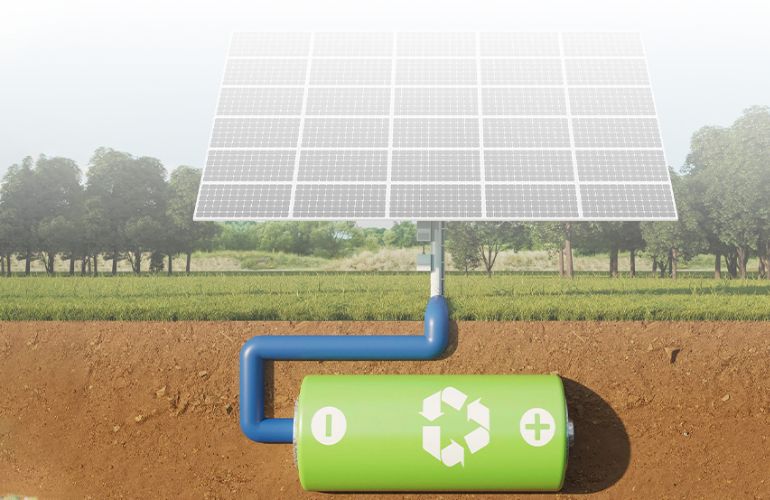
Image Credit: Sova Solar
Global Carbon Credit Policies
Cutting greenhouse gas pollution at one of its most important sites is one way to increase global awareness about the dangers of climate change and environmental degradation, which in turn drives the development of carbon credit policies. With this reason in mind, that is why there is a vast reason why this solar power comes in handy these days. The first cleaner source of energy will be nice for the earth. This blog post is talking about how policies that offer carbon credits are encouraging many people around the world to build solar energy projects.
What are carbon credits?
A carbon credit is a paper permit that lets the owner put out one ton of carbon dioxide or the same amount of another greenhouse gas. Its purpose is to generate a revenue benefit that will encourage people to restrain from further emissions. People, companies, and governments can buy these carbon credits to balance out carbon they emit into the atmosphere. Revenues from such sales are usually put into environmental projects, including research in renewable energy.
So, in the market, carbon credits are a mechanism through which emission reduction goals can be achieved with an eye to an international climate agreement, such as the Paris deal. In fact, when signing such an agreement, a country undertakes to limit the amount of greenhouse gases to be put in the air. Carbon credits are one mechanism to meet such limits.
How are carbon credits encouraging people to use solar energy?
The best way to switch to renewable energy sources is through the use of carbon credits. Solar power is one of the best ways to fight climate change. In its basic form, solar power means getting electricity from the sun’s energy and rays. Because fossil fuels release harmful gases into the air, governments and businesses are using carbon credit rules to help solar energy projects grow.
Rules regarding carbon credits provide the funding for solar energy projects, thereby making these businesses more attractive to investors and producers. Companies that generate electricity from the sun must offset some CO2 emissions. For each ton of CO₂ compensated for, the firm earns carbon credits that it can sell to any business interested in complying with a particular level of emission.
For example, large solar farms that produce a lot of clean energy can earn carbon credits, which they can then sell to companies that produce a lot of pollution. In this way, everyone benefits: solar projects earn more revenue, and businesses contribute to the development of renewable energy infrastructure.
Getting people to invest in solar technology
Carbon credits are increasing investments in solar technology because governments and individual investors are becoming more aware of how vital solar energy is for creating mechanisms that lower carbon emissions. Its projects in locations such as the European Union and California are more likely to gain investment because an established carbon credit market exists. Investors know they can generate revenue by selling carbon credits.
Also, businesses that look forward to compensating for their emissions purchase many carbon credits, which means solar energy firms get continuous revenue. This further increases the number of solar methods and ideas presented by people, making them more efficient and reducing their costs.
Global policies on carbon credits are crucial in the growth of the production of solar energy.
Many countries of the world have quite robust carbon credit policies that would help to drive the move toward clean energy. Let’s have a look at some of the most important ones.
Image Credit: MIT Energy Initiative
Accelerating Solar Energy Adoption
EU ETS stands for the European Union Emissions Trading System.
As a world leader in carbon credits, the European Union has implemented its EU ETS, Emissions Trading System. Companies can sell carbon credits through the EU ETS, thus creating a market-based way to reduce emissions. Companies that release more carbon than they are supposed to can buy credits from companies that have cut their carbon output. Europe’s solar farms and other renewable energy projects have a big financial reason to succeed because of this method.
Cap-and-Trade Program in California
The system is called the Cap-and-Trade Program, which the state of California instituted; it caps off the amount of greenhouse gases the entire state can produce, then requires businesses to acquire permits that ensure they stay within those limits. It has been at the forefront in promoting solar energy. The California Solar Initiative is a large program that motivates people to make use of solar power and also provides incentives for those participating. As demand for solar energy increases, these have helped many of such initiatives generate funds needed.
Market for Carbon Credits
China is playing a significant role in saving the world by reducing carbon dioxide emissions. In fact, China is the largest contributor in this area. China recently set up a market for carbon credits to control the amount of pollution it puts into the air. Solar power has increased even more than this launch; the Chinese government has amended certain policies concentrating on solar power that allow the joining of the carbon credit markets for companies. As a result, China has built a huge amount of new solar power equipment, making it the world’s biggest maker of solar panels.
India’s plan to deal with climate change
India, which has one of the most populous populations in the world, has a lot of energy needs and natural problems. India has been attempting to increase its renewable energy portion in the energy mix as part of its National Action Plan on Climate Change. Policies that offer carbon credits have been a big part of making solar plants possible. Another thing that helps the growth of solar energy systems is that India is one of the biggest buyers of carbon credits.
Problems and chances to solve
This practice, however positive for the enhancement of solar energy, is beset by various problems. In the first instance, carbon credit markets are spread unevenly. While some of these markets exist in certain old markets, new markets have to be developed everywhere. The countries with long-running markets can earn more incentives regarding financial terms than the newcomers. This makes it difficult for some countries to fully benefit from these policies.
The price of carbon credits can also fluctuate in the market, which may make it difficult to raise money for solar projects. These problems can be solved, though, as more countries use carbon credit programs and more people want clean energy.
Conclusion
Carbon credit policies worldwide are accelerating the use of solar energy through financial benefits and investment in green technologies. As countries get tighter on their goals for emission reduction, solar power will play an even bigger role in helping them achieve those goals. The carbon credit markets will allow countries to reduce their carbon footprint and, at the same time, support a clean energy future in a way that is environmentally friendly. This measure will encourage more people to use solar energy, which is the right thing to do to slow down climate change and make the world greener for future generations.