
Blog Details
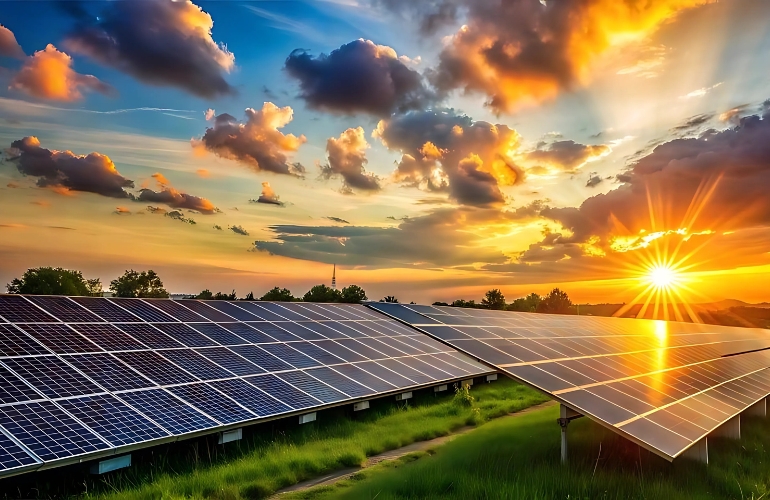
Cloudy Days and Solar
When you think about solar energy, it’s easy to picture a home bathed in golden sunshine, panels gleaming under a blue sky. But what about when that sunshine disappears behind clouds or snowflakes? If you’re wondering whether solar panels still work on those grey, rainy, or snowy days—the answer is yes, they do. It just helps to understand how and to what extent.
Understanding Light vs. Direct Sunlight
The magic of solar energy isn’t tied to sunshine alone. Solar panels generate electricity using light—more specifically, photons—not just heat or clear skies. So even on overcast days, there’s enough ambient light to keep those panels working. It might not be peak performance, but your system doesn’t stop just because the sun isn’t visible.
High-quality solar panels are built to perform under less-than-ideal conditions. If you’ve invested in modern monocrystalline panels, chances are you’re still generating a reasonable amount of electricity even when the clouds roll in.
Cloudy Days
Thick clouds may dim the output, sometimes reducing efficiency to 10–25% of what you’d get on a sunny day, but it’s far from a shutdown. In fact, there’s a neat little phenomenon called the “edge-of-cloud effect” that can cause sudden boosts in energy as sunlight gets momentarily magnified along cloud edges. It’s these subtle details that show how dynamic and adaptive solar technology has become.
Monitoring systems today let you see exactly how your panels are performing in real time. So if the weather is acting up, you can still keep tabs and adjust if needed.
Rainy Weather
Sure, heavy rain will dampen your system’s immediate output. But here’s the upside: rain acts as a natural rinse for your solar panels. It washes off dust, bird droppings, and pollen that might otherwise be blocking sunlight. Once the storm clears, those freshly cleaned panels often work more efficiently than before.
In places where rain is frequent or where pollen and grime accumulate quickly, it’s still worth giving your panels a hands-on cleaning every now and then. Or you can hire a professional solar panel cleaning service to make sure they’re in peak shape.
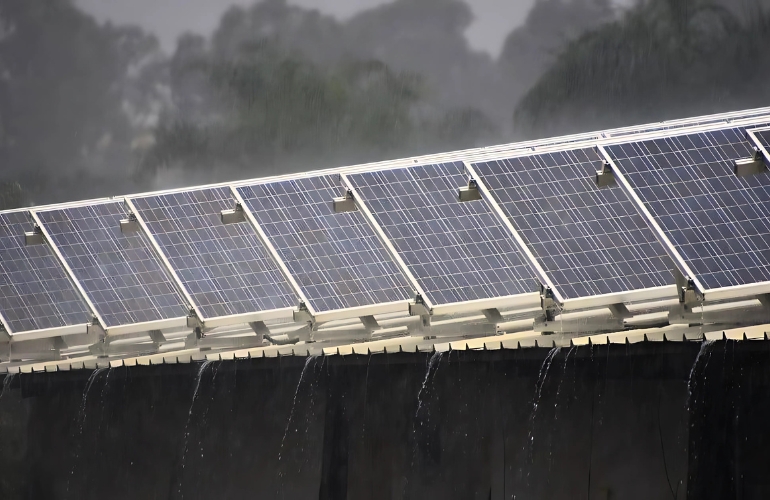
Solar In Heavy Rain
Snow
A thick blanket of snow may look serene, but it can momentarily block your panels from doing their job. Fortunately, most solar systems are installed at an angle, so snow tends to slide off as it melts. The panels themselves absorb enough residual heat from daylight—even on freezing days—to help this process along.
And here’s something interesting: snow on the ground can actually reflect sunlight upward, bouncing more light onto your panels. It’s called the albedo effect, and it can give your system a small boost on clear winter days.
If your area sees frequent, heavy snowfall, it might be worth clearing off panels manually (carefully, of course), just to keep things running smoothly.
Temperature
Many people assume hotter days equal better solar output, but it’s actually the opposite. Solar panels prefer cooler temperatures. Heat increases the resistance in electrical circuits, which can lower your panels’ efficiency. So those crisp, sunny winter days? They might give you a better return than a blazing summer afternoon.
Getting the Most from Your Panels Year-Round
No matter where you live, you can take steps to keep your solar setup running efficiently across seasons. Choosing the right panel type, like monocrystalline for better low-light performance, makes a difference. Ensuring your system is installed with the right tilt and orientation helps with snow shedding and sun absorption.
Using solar monitoring instruments that let you know about system performance is also a smart option. Should output unexpectedly decline more than anticipated, this signals your need to look for snow cover, trash, or other maintenance requirements.
And never undervalue the influence of shade. Output can be much changed by a few trees or a neighboring chimney producing partial shadows. One can remedy that with regular trimming and clever system placement.
Conclusion
Solar energy is not only for those sunny days. Your panels will remain operational across gloomy skies, wet spells, and snowy winters with the correct configuration and care. Sure, there may be some productivity declines, but these are natural for the seasonal rhythm and not obstacles.
You are maximizing your investment by knowing how weather conditions affect your system and approaching solar panel maintenance proactively. Solar panels are made to fit with nature, not against it, rain or sun, snow or cloud.
Leave A Comment