
Blog Details
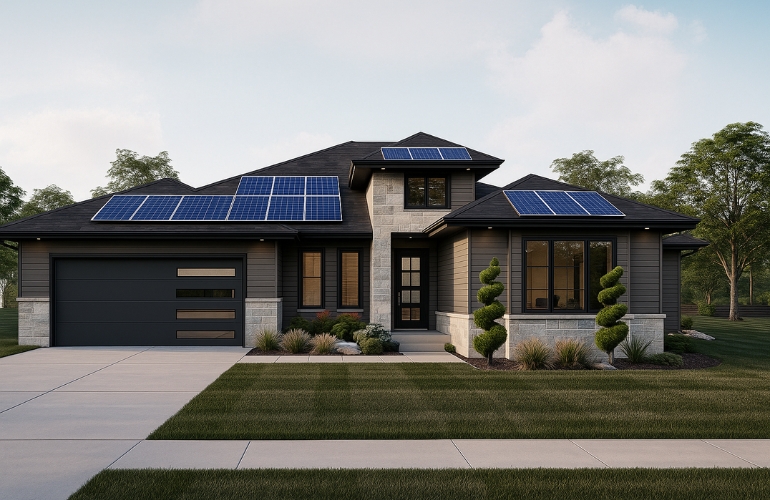
Smart Solar Living
Since its early rooftop days, solar technology has advanced significantly. In 2025 and beyond, it’s not just about producing clean energy; it’s about producing smarter energy. And the revolution is being driven by two powerful forces: artificial intelligence (AI) and the Internet of Things (IoT). Together, they’re transforming how you interact with solar energy at home, making systems more responsive, efficient, and intelligent than ever before.
Why IoT Is the Foundation of Smart Solar Living
You may already know that solar panels capture sunlight and convert it into electricity. But when your solar system is embedded with IoT technology, every component becomes a data source. IoT-enabled devices like smart solar panels, inverters, batteries, and even your appliances continuously collect and share data.
Your smart solar panels, for instance, do more than generate energy. They monitor how well they’re performing, check for potential issues like dust accumulation or temperature anomalies, and send alerts when something needs attention. Smart inverters translate DC to AC, but with IoT integration, they also manage energy flow and talk directly to the grid. Meanwhile, connected batteries track charge levels and health metrics in real-time, helping you manage stored power with precision.
Even your smart home devices—like lighting systems, thermostats, or washing machines—can be synced into this network. With smart meters showing how energy flows between your solar panels, your home, and the grid, you have a live dashboard of your household’s energy ecosystem.
AI: The Brain Behind the Operation
If IoT is the nervous system, AI is the brain. AI uses data collected by IoT devices to make intelligent decisions about your energy system. For example, by analyzing past usage patterns, weather forecasts, and real-time performance metrics, AI can accurately predict how much solar energy your system will produce tomorrow.
This lets your system optimize how it stores and distributes energy. If solar production is expected to spike at noon, AI might choose to charge your battery fully before the grid hits peak demand pricing. Or if your house tends to use more power in the evening, it may prioritize storing energy earlier in the day.
Beyond predictions, AI helps reduce waste. It can delay high-consumption appliances like dryers from running when solar output is high or suggest adjustments to usage patterns to lower bills. Smart algorithms also manage your battery’s charge cycles to extend its lifespan and reduce wear.
Proactive System Maintenance and Fault Detection
AI-driven diagnostics detect subtle signs of wear or malfunction before they escalate. If a solar panel isn’t pulling its weight, or an inverter begins underperforming, the system can alert you—or even schedule a technician. This predictive maintenance minimizes downtime and protects your investment.
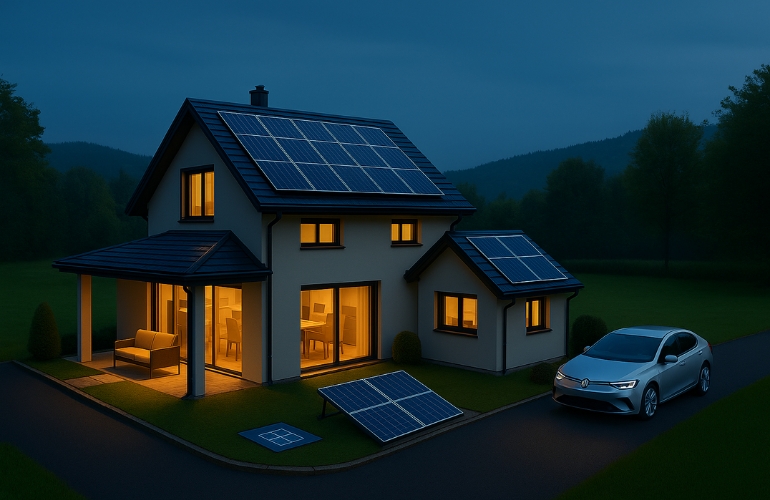
Bifacial solar panels
Smarter Grid Participation
With the right AI configuration, your home can do more than just power itself. It can support the larger grid. AI makes intelligent decisions about when to export extra electricity to the grid—and when to draw from it. If your utility provider offers net metering or dynamic pricing, this means you can earn money back by feeding energy into the system when it’s most valuable.
Your smart solar home can also respond to grid signals, reducing energy usage during peak demand or participating in demand response programs for added incentives.
How AI and IoT Work Together
The relationship between AI and IoT is deeply symbiotic. IoT sensors gather all the raw performance and usage data. AI then processes that data to identify patterns, make decisions, and execute actions that optimize your system’s performance. Without real-time data from IoT, AI can’t function effectively. And without AI, the valuable insights that make your system truly smart wouldn’t exist.
Emerging Innovations Shaping the Future
In 2025, AI and IoT are also enabling newer solar technologies:
- Bifacial solar panels that absorb sunlight from both sides, paired with AI to monitor and maximize output based on surface reflections.
- Transparent solar panels for windows and facades in urban environments, optimized by AI for fluctuating light conditions.
- Floating solar farms, where IoT monitors water movement and panel alignment, while AI adjusts system behavior based on wind, sun angles, and temperature.
- Perovskite and quantum dot solar cells, where AI-driven testing is accelerating material improvements for higher efficiency.
- Plug-and-play solar systems that use AI to auto-configure with your home’s layout and energy habits.
Benefits That Go Beyond the Panels
This AI-IoT synergy doesn’t just save you money; it transforms your living experience. You benefit from:
- Lower energy bills through real-time optimization.
- Greater independence from unpredictable utility rates.
- Improved comfort thanks to automation that adjusts your environment based on behavior.
- Peace of mind knowing your system is monitored 24/7.
- Actionable insights into how and when you use energy.
Challenges to Keep in Mind
While the promise is huge, there are real-world hurdles. Data privacy is a growing concern, as smart homes generate vast amounts of information. You’ll also want to ensure all your connected devices can speak the same language—standardized protocols are still catching up. And although prices for smart components are falling, there’s still a higher upfront cost compared to traditional setups.
Cybersecurity is another crucial consideration. As more devices connect online, protecting your home from digital threats becomes as important as shielding it from power outages.
The Road Ahead
AI and IoT are no longer buzzwords—they’re now critical tools in creating smart, sustainable, solar-powered homes. If you’re exploring solar energy in 2025, the conversation is no longer just about panels. It’s about how connected and intelligent your entire system can be. With the right setup, you don’t just harvest sunlight—you unlock a fully integrated energy ecosystem that works in sync with your lifestyle.