
Blog Details

Roof-Mounted Solar Panels
Harnessing solar energy is smart for homeowners aiming to cut energy bills and reduce their carbon footprint. A pivotal decision in this process is choosing between roof-mounted and ground-mounted solar panels. Each option has its own set of advantages and considerations. Let’s explore both to help you make an informed choice.
Roof-Mounted Solar Panels
Installing solar panels on your roof is a common approach, utilizing existing space without occupying your yard.
Advantages
- 1.Efficient Use of Space: By placing panels on your roof, you preserve yard space for other activities.
- 2.Cost-Effective Installation: Roof installations often require fewer materials and less labor, potentially lowering installation costs.
- 3.Protection for Your Roof: Panels can shield your roof from weather elements, extending its lifespan.
Considerations
- 1.Roof Condition and Orientation: The effectiveness of solar panels depends on your roof’s angle, direction, and condition. Roofs needing repairs or lacking proper orientation may not be ideal.
- 2.Maintenance Challenges: Accessing roof-mounted panels for cleaning or repairs can be difficult and may require professional assistance.
- 3.Potential for Roof Leaks: Improper installation can lead to roof leaks, emphasizing the need for experienced installers.
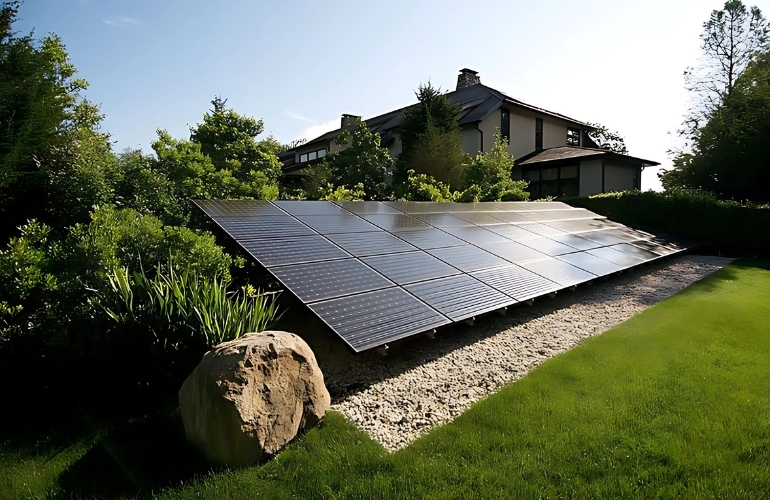 Ground-Mounted Solar Panels
Ground-mounted systems involve installing panels on your property, independent of your home’s structure.
Advantages
- 1.Optimal Positioning: You can adjust the tilt and orientation for maximum sun exposure, enhancing energy production.
- 2.Easier Maintenance: Ground-level installations simplify access for cleaning and repairs, making upkeep more straightforward.
- 3.No Roof Constraints: These systems are ideal if your roof isn’t suitable due to shading, material, or structural issues.
Considerations:
- 1.Space Requirements: They require sufficient yard space, which might not be feasible for all properties.
- 2.Higher Installation Costs: Additional materials and labor can make ground-mounted systems pricier.
- 3.Aesthetic Impact: Visible installations in your yard may affect the visual appeal of your landscape.
Key Factors to Consider:
- 1.Available Space: Assess your property to determine if you have adequate space for a ground-mounted system without sacrificing other uses.
- 2.Budget: Consider the total installation costs, including potential additional expenses for ground-mounted systems.
- 3.Roof Condition: Evaluate whether your roof can support solar panels or if it requires repairs or reinforcement.
- 4.Aesthetics: Decide which option aligns better with your property’s appearance and your personal preferences.
- 5.Maintenance Accessibility: Think about how comfortable you are with accessing your panels for routine maintenance.
Conclusion
Both roof-mounted and ground-mounted solar panels offer viable paths to harnessing solar energy. Your choice depends on factors like space, budget, roof condition, and aesthetic preferences. Consulting with reputable solar companies can provide personalized insights, helping you select the best option for your home’s energy needs.