
Blog Details
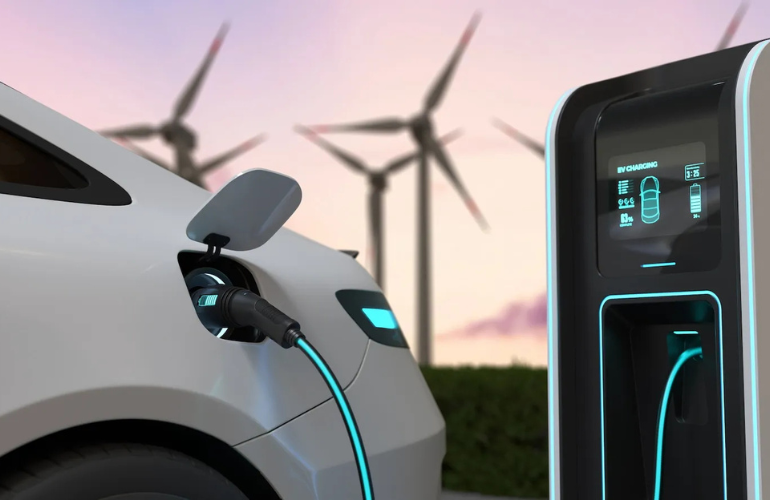
Ev Car is getting chared
Image Credit: Experian
As the world speeds towards a green future, solar energy has become one of the most viable renewable energy sources. But unleashing the full potential of solar power presents some challenges, primarily because of its intermittent nature and the issues of balancing supply and demand. Enter Artificial Intelligence (AI) and smart grids: an unstoppable duo transforming how we produce, distribute, and use solar energy.
The Challenge of Solar Variability
One of the greatest difficulties with solar power is its unpredictability. Solar energy generation is at its highest point during the day but diminishes at night or in cloudy conditions. This irregularity tends to result in energy supply and demand mismatches, producing wasted energy or supply shortages. Conventional grids, which were established for stable energy flows, have difficulty coping with these instabilities effectively.
What Are Smart Grids?
Smart grids are modernized electricity networks that use digital technology and real-time communication to monitor, predict, and manage the flow of electricity. Unlike traditional grids, smart grids can automatically adjust energy distribution, integrate various energy sources, and even enable two-way communication between energy producers and consumers. They are the backbone of the modern, AI-powered energy ecosystem.
How AI Enhances Smart Grids
Artificial Intelligence powers smart grids by processing huge volumes of data in real-time, making the grid capable of “thinking” and “acting” smart.Here’s how AI does it:
Solar Output Forecasting:
AI takes weather patterns, satellite images, and past generation trends to forecast solar energy output for the next several hours or days. Grid operators can then plan ahead, matching supply with forecasted demand.
Improving Energy Storage:
AI algorithms dictate optimal charging and discharging times of batteries so that excess solar energy is stored during availability and released during requirements. This levels out peaks and troughs and provides a consistent supply of power, even when the sun is not shining.
Demand Response Management:
AI determines consumption behavior and can adjust energy consumption in homes and businesses automatically. For instance, it may recommend operating dishwashers during peak sunshine hours of energy generation or reducing air conditioning temporarily during peak demand times.
Grid Stability:
AI is constantly checking the health of the grid and can identify impending faults or failure. When a problem develops, it can divert power, isolate the affected segments, and even make recommendations for maintenance, avoiding large-scale outages.
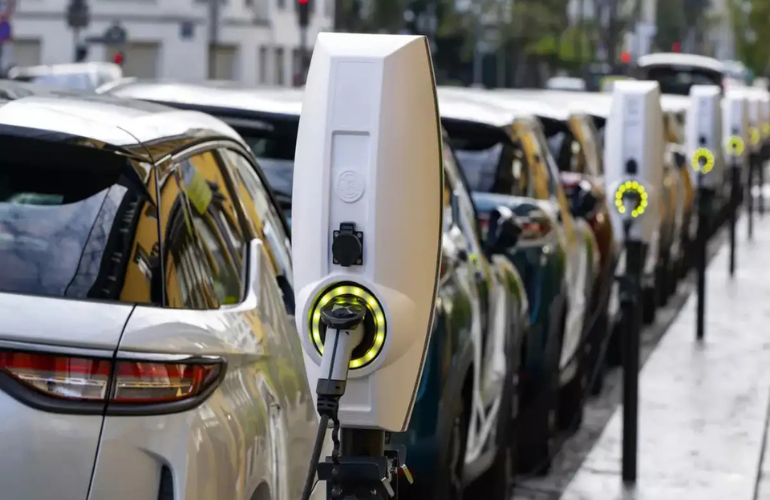
Electric Cars Charging at Public Stations
Image Credit: The Economic Times
Real-World Applications Several nations are already incorporating AI-enabled smart grids to improve their solar infrastructure.
Examples include:
California:
Confronted with high solar penetration, California employs AI-based demand response programs to match energy consumption with solar output, lowering grid pressure during peak periods.
Germany:
With high levels of renewable integration, Germany’s smart grids employ AI to regulate fluctuating solar inputs to supply stable and reliable electricity.
Australia:
AI assists in the management of decentralized solar arrays over vast rural territories, ensuring when to export energy back into the grid or save it locally.
Benefits Beyond Efficiency
The union of solar energy and AI doesn’t merely have technical appeal — it also pays dividends for consumers and the planet.
Lower Costs:
With AI prediction of supply and demand, utilities are able to skip expensive peak-time energy buys and share savings with consumers.
Lower Carbon Footprint:
Effective utilization of solar energy lowers dependence on fossil fuels, slowing climate change.
Energy Empowerment:
Shoppers have more ability to manage their energy consumption, with smart meters and apps offering facts about how and when to use solar energy efficiently.
The Future: Solar and AI Hand in Hand
With advancing technology, AI will only get more advanced, with deep learning and sophisticated analytics allowing it to integrate the solar with other forms of renewables, including wind and hydro. It will be a future where solar panels will directly interact with AI systems in terms of scheduling maintenance, maximizing sunlight by adjusting the angle positions, and even exchanging surplus energy with nearby communities in real time. Governments and industries alike are spending big on smart grid technologies in hopes of harnessing these opportunities. It’s not about keeping the lights on anymore — it’s about rebuilding the whole energy system into something stronger, more efficient, and more sustainable.
Conclusion
The marriage of solar power and AI-powered smart grids is transforming our conception of power generation and delivery. Through AI’s analytical and predictive capabilities, smart grids can foresee and react to the issues of solar variability, providing clean, renewable energy when and where it’s most needed.