
Blog Details

Homeowners Going Solar
As energy costs keep rising and the climate emergency deepens, homeowners are seeking to cut expenses and their carbon footprint. For them, solar power has become the ideal answer. But what makes it a real revolution is the range of incentives on offer in 2025—federal tax credits, rebates from states, and even local utility benefits—that make solar panel installation cheaper than ever. Here is a complete, no-nonsense primer on the solar incentives homeowners need to know about in 2025—along with real-world advice on how to maximize them.
The Federal Solar Tax Credit: 30% Savings One of the best incentives homeowners can access is the Residential Clean Energy Credit, or the federal solar tax credit. For installations that were put into service in 2025, the credit provides homeowners with a deduction equal to 30% of their total solar installation costs, including panels, inverters, batteries, and labor, from their federal income taxes.
For instance, if your solar system is $20,000, you’d reduce your tax payment by $6,000! Better yet, if you don’t owe enough taxes to cover the credit all in one year, you can carry over the balance into the next year.
-
- Key Tip: The 30% rate is set to keep going through 2032, but political tides may shift the situation. There are some proposed measures in Congress that aim to discontinue the credit sooner than scheduled. If the latter should come to pass, buildings completed after 2025 would not be eligible.
Batteries and Storage Qualify Too Another major plus in 2025: solar panel-charged battery storage systems qualify for the same 30% tax credit. That means homeowners can invest in backup power and energy independence while taking a substantial deduction.
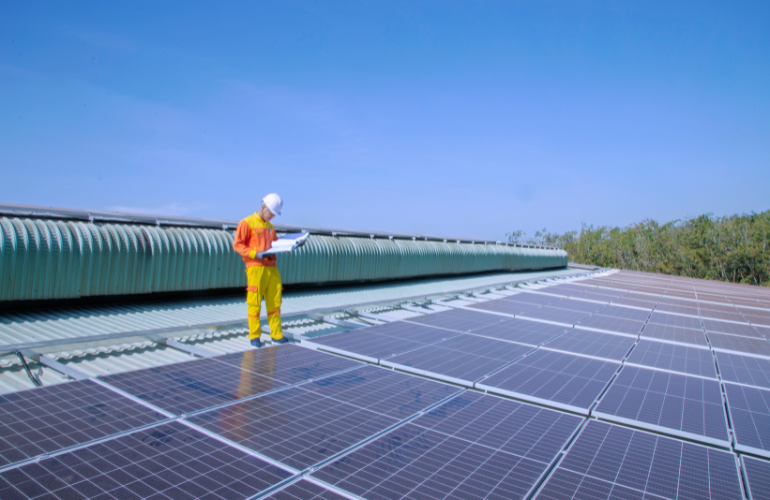
Solar Technician Installing Solar Panels
State and Local Incentives: Additional Savings
Although the federal tax credit is the largest slice of the pie, several states and local utilities provide their own incentives that can significantly lower your net expenses. These incentives differ greatly by location, but here are some that are typical to look for:-
- State Rebates – Most states have direct rebates that lower initial costs by 5% to 20%.
- Performance-Based Incentives – Certain states, such as New Jersey, provide payments for the amount of electricity your system produces.
- Property Tax Exemptions – Certain states exempt solar installations from property tax, which saves you money in the long run.
- Sales Tax Exemptions – In some states, property owners can purchase solar equipment without paying sales tax.
- Solar Renewable Energy Certificates (SRECs) – In certain areas, you can get certificates for every megawatt-hour your system produces and sell them for additional revenue.
- Pro Tip: Find out what programs are offered in your state by contacting your state’s energy office or your local utility company.
Energy Efficiency Upgrades Homeowners who are contemplating a solar installation should also think about other efficiency upgrades—such as energy-efficient windows, insulation, or heat pumps—that can also be eligible for extra federal tax credits of up to 30% (with annual limits). Combining these upgrades with solar can turbocharge your energy savings.
Timing Matters—Act Quickly!
- This is the catch: if Congress alters the solar tax credit or local rebates evaporate, homeowners who wait could be out of luck.
Here’s what you need to do:
-
-
- Plan Now – Reach out to local solar installers and get quotes. They can provide estimates for costs, savings, and incentives.
- Get Permits Early – Depending on where you are, permitting and grid interconnection may take several months. Get the paperwork started as soon as possible.
- Verify Your Tax Status – The federal solar credit is a non-refundable credit, which means you must have sufficient tax liability to receive a benefit. If you don’t have a high tax liability, you may not be able to claim the full amount in one year (although you can roll it over).
-
Your 2025 Solar Incentive Checklist
- Obtain multiple quotes from qualified installers.
- Look at state and utility incentives.
- Verify your eligibility for the 30% federal credit.
- Consider adding a battery to increase savings.
- Discuss tax implications with a qualified professional.
Conclusion
2025 promises to be a make-or-break year for homeowners who are thinking about solar. With a 30% federal tax credit still available—along with local and state rebates and performance-based incentives—going solar has never been more financially attractive. Yet possible fluctuations in federal policy and peak demand may make it increasingly difficult to take advantage of these savings if you delay.
If you’re ready to reduce your electric bill, shrink your carbon footprint, and increase your home’s value, now is the time to act. Talk to your local installer, get your paperwork in order, and lock in your savings before these incentives potentially change.