
Blog Details
The solar energy source is changing how we tap into clean energy, making it possible for the world to completely convert to clean sources of energy. Therefore, the increasing popularity of solar panels, which is triggered by the quest for environmental conservation and cost-effectiveness, has made solar energy more attractive to individuals and corporate entities as well as governments. But now, with new methods of solar panel production, these systems are turning out to be much more affordable and efficient. In this blog post, we shall delve into the various processes involved in the manufacture of solar panels and their respective types and outline trends forecast for the industry in the future.
What Different Types Of Solar Panels Are Available?
Now, with regards to solar panels, they can be categorized into three main types: monocrystalline, polycrystalline, and thin film. Each type differs in its efficiency, price, and production method.
Monocrystalline Solar Panels
Monocrystalline panels’ crystals grow in a single crystal lattice structure, allowing them to operate at a high efficiency. They are also the most efficient type of solar panel available, converting most of the light received into electricity. This is however fed by the costly advanced technologies built into it, making it more expensive than most of the other solar panels. Monocrystalline solar cells are made using high-purity silicon, which helps in maintaining their strength and operating efficiency, which warrants the cost.
Polycrystalline Solar Panels
As their name suggests, polycrystalline solar panels are composed of little pieces of silicon blended to form a solid structure, which makes them less expensive and easier to manufacture. They are, however, less efficient in energy generation because of the presence of several silicon borders within the structure as compared to their monocrystalline counterparts. Thus, while this may result in less energy being produced, they represent a better option for those who, for one reason or another, do not wish to spend too much on solar energy technologies.
Thin Film Solar Panels
Thin film panels are comprised of very thin layers of semiconductor materials such as cadmium telluride or amorphous silicon. These types of solar panels are the least costly but similarly the least efficient. These panels are thin and flexible, therefore they can be used where conventional stiff panels cannot be used, for example, on certain roofs or portable solar applications. However, due to their low efficiency, a larger surface area is needed in order to produce the same power output as the monocrystalline or polycrystalline panels.
Overview of the Solar Panel-Making Process
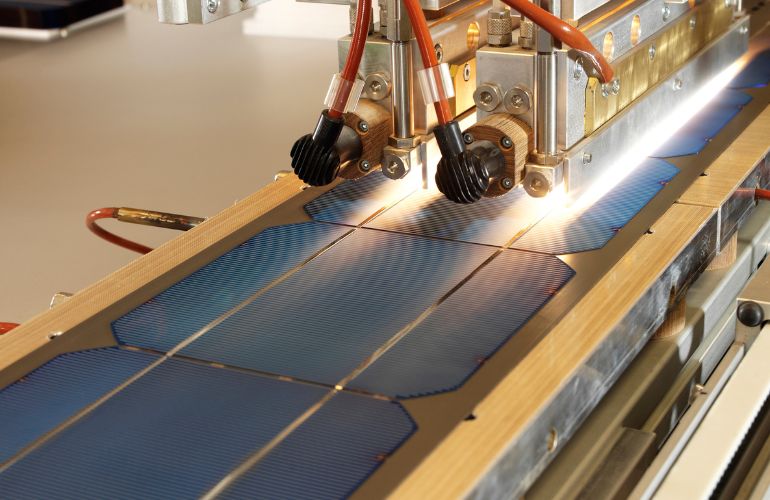
The solar panel-making process, or solar cell manufacturing, is elaborate and takes a certain level of technology. Here is an overview of how solar panels are made in a less complicated way:
Production of Silicon began with high-purity silicon, which is quite significant in solar cell fabrication. Sand is used to retrieve silicon, and further processing gives rise to polysilicon, which is the primary substance constituent of solar cells. Wafer Cutting When the silicon is ready, it is cut into thin, flat pieces known as wafers; typically, the solar units are made of these wafers.
The monocrystalline wafers consist of a single crystal of silicon, while the polycrystalline wafer is made from chipped silicon.
- 1. Wafer cleaning: The wafers are then cleaned in order to remove any foreign materials and ready for the next step. This is important because contaminants could lead to poor performance of the solar cells.
- 2. Doping and creation of p-n junction: The wafers then go through a process known as “doping,” in which a few selected impurities are added to create a p-n junction to make the solar cell pass current when sunlight strikes on it.
- 3. Solar Cell Processing: Once doping is done, the wafers are made into solar cells. Each cell of the solar unit converts the rays into electrical energy via a photovoltaic effect.
Module Assembly: The solar cells are interconnected and packaged into a single assembly known as the module. In most cases, tempered glass is placed as a cover on the face of the module, and a stiffener is used at the back of the module. Testing and Quality Control After the production of solar panels, every single unit is tested under functional loads for efficient performance, stability, and safety before being packed and shipped. This also includes assessments of performance in bright and low-light conditions and temperature extremes.
Obstacles Encountered in the Production of Solar Energy Panels
There have been strides made in the manufacturing of solar energy panels. However, there are certain hurdles that producers still need to overcome:
- 1. Cost of Production: To begin with, the high-efficiency monocrystalline solar panels school requires a lot of capital in the purchase of other such panels, such as the sputtering machine used in the solar panel manufacturing business. Manufacturing cost-cutting does not seem to ease any time.
- 2. Solar Energy Panel System Density: Next to the above is the boosting of solar energy panels and remodeling their designs to the user’s satisfaction. Among the disadvantages of these materials, it is clear that they occupy relatively large spaces, which makes these panels inappropriate for very compact places where it is essential to generate the highest possible power.
- 3. Availability of Material: The cost of materials, including pure silicon, can have an influence on the production process and pricing. This means consistent supply may be hard to maintain, and this will lead to increased costs in production and supply.
- 4. The Difficulty of the Process: The manufacturing solar panel process consists of many detailed, complicated steps that consist of wafer cutting and leading to cell assembling, processes needing different tools, and a professional workforce. These intricacies may affect production timelines and costs.

How the Manufacturing of Solar Panels Will Be in the Next Decades
There are several trends and innovations that can help the manufacturing of solar panels in the years to come, and this makes it more attractive.
- 1. Efficiency of Solar Panels: Due to ongoing research, advancements in solar panel efficiency are projected. This means that consumers will be able to produce more electricity with the same amount of panels, thus minimizing the space and expense needed for installation.
- 2. Emerging Advanced Composite Materials: In the course of seeking alternative energy sources, different materials, such as perovskite, that can be used instead of silicon for solar cells are being investigated. Such materials are expected to bring down costs and enhance performance within a few years.
- 3. The efficacy of automation in manufacturing: There is anticipation that automation and artificial intelligence-bolstered production lines will ease the manufacturing process, saving on costs and increasing production levels. This will lead to the lowering of their prices and consequently the wider acceptance of solar panels by many people.
- 1. Sustainable Development in Manufacturing: Use solar panels for green energy and sustainably grow these.
- 2. Julie: Grow solar panels with green energy and find innovative ways to reproduce and process other materials.
- 4. The Role of Any Introduction: As the solar industry expands rapidly, the labor force, for example, in the installation or solar panel factories, is growing rapidly, causing economic development and job opportunities.
Conclusion:
With the progress of solar technology, the manufacturing business for solar appliances will experience considerable expansion. Designed to address the most recent issues in the market, especially those of performance improvement and cost reduction, solar panels are no longer produced for use exclusively in houses. History of solar manufacturer technology, the process of dissertation on how to make solar panels, or future predictions about the production of solar module systems—there is no doubt that solar energy technology will be necessary for achieving a low-carbon energy economy. Solar panels have a positive impact on the environment and help save money on energy costs in the long run, which makes the investment worth it in this day and age.